The third of five special blogs written for Arts and Culture by University of Exeter researchers and staff to mark Black History Month. This time Kate Wallis, Lecturer in the Department of English and Film, shares seven Black women who, across six decades, have shaped and changed the UK publishing industry.
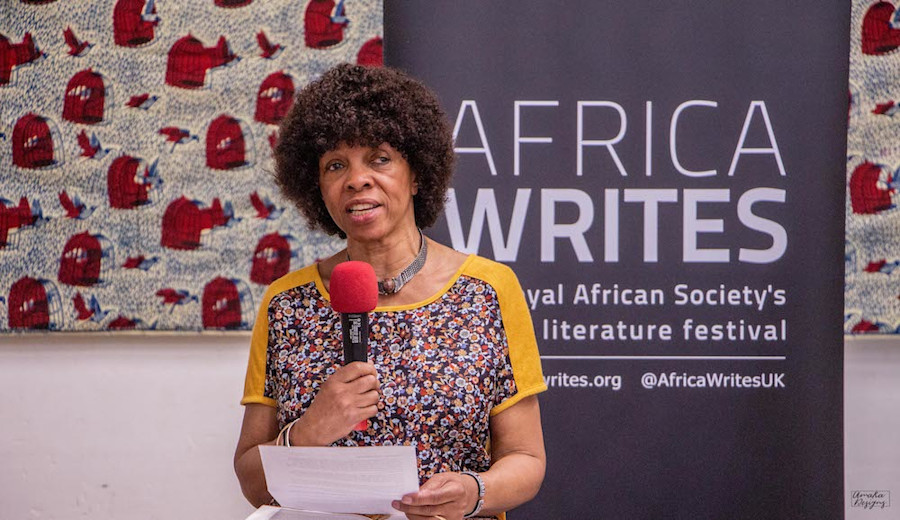
I am really happy to be part of this series, following on from Idris Yana’s post on African Women Writers and Alix Harris’s on Black British theatre and performance practitioners. My name is Kate Wallis and I’m a Lecturer in the Department of English and Film at University of Exeter. My own research focuses on African and African diaspora literary networks through the frame of publishing companies, literary organisations, literary magazines and festivals.
I worked in the publishing industry for 15 years before moving into academia – for UK-based Palgrave Macmillan and for Kenya-based Kwani Trust – and am currently a Director of Rwanda-based Huza Press as well as a Co-Producer for the Africa Writes festivals in Bristol and Exeter. This work and the relationships built through it continue to shape my thinking and research around with the ways in which African and African diaspora literature is created, valued and circulates regionally, across the African continent and globally. These are relationships that frequently work to challenge my own position as a white cis female UK-based researcher and a beneficiary of the same unequal structures of power my research often works to draw attention to.
In June 2020, the Black Writers’ Guild was formed and wrote a powerful open letter calling out ‘deep-rooted racial inequalities in the major corporate publishing companies’ and highlighting the UK publishing industry’s failure to support black literary communities. This week, I’ve been part of launching a new MA module called ‘Publishing and Power: Black and Asian Literary Networks in the UK’ at Exeter which is directly concerned with bringing more scholarly attention to the significant work of black literary communities in the UK over the last 70 years, as well to the work of writers and publishers of colour more broadly. I believe making this work more visible and valued within the university space, as well as within a wider cultural space in the UK, is a necessary part of supporting structural change within the UK and global publishing space. This module will form part of a new MA Publishing programme that University of Exeter is launching for the 2021/22 academic year which places a particular emphasis on decolonising methodologies and engaging with issues of access and representation in publishing.
Building out of this, I’m excited to have this opportunity to highlight the work of seven Black women who across six decades have shaped and changed the UK publishing industry and whose work is vital to a project of documenting Black British publishing histories. As Alix Harris commented in her post, this task of narrowing the list to seven is hard; I’ve therefore chosen to focus here on founders and editors of publishing companies (although work across literary agenting, marketing, sales, production and finance deserves and needs similar attention). I’ve also decided to cheat very slightly by beginning my list from Margaret Busby, current Chair of the Booker Prize, who is widely known and celebrated for becoming the first black woman publisher in the UK when she co-founded Allison and Busby in 1967. This list is therefore framed as a selection of seven significant Black women publishers who have followed Busby, often working alongside, directly acknowledging, or with support from her.
University of Exeter
Room 153, Queen's Building
The Queen's Drive
Exeter EX4 4QH