MA Curation student Siyuan Huang shares with us more about her recent internship working as an Audience Development and Collections Assistant at the Royal Albert Memorial Museum and Art Gallery in Exeter.
At the beginning of my first term, I visited the Royal Albert Memorial Museum (RAMM) in Exeter with my tutors and fellow students from the MA Curation programme. I vividly remember walking through the museum’s galleries, mesmerised by the diverse collections and the intricate displays. Guided by the curators from RAMM, we went behind the scenes to explore storage rooms and learn about the curating stories and extensive efforts put into decolonising the representation of museum artefacts. This insider’s view of the museum’s inner workings was fascinating, and I could hardly imagine that I would soon be part of it.
A few months later, I was thrilled to be offered an internship as an Audience Development and Collections Assistant at RAMM. The opportunity felt both exciting and slightly unreal, given how recently I had been a visitor myself. This internship provided me with an invaluable glimpse into the inner workings of a UK museum, equipping me with practical skills and preparing me for my future career in the art world.
Bridging Cultures: Translating the Audio Guide
One of my primary responsibilities was translating the audio guide “Treasures of the Museum” from English to Chinese. It is a trail of sixteen significant objects spread across the museum’s galleries, covering subjects such as archaeology, history, fine art, anthropology, zoology, and geology. This task was not just about language conversion; it was about making the museum more accessible to Chinese-speaking visitors. Being seemingly the only Asian worker during the internship in the RAMM office, I was glad that my knowledge of Mandarin and Chinese culture helped. I felt a deep sense of pride knowing that my work would help bridge cultural gaps and provide a richer experience for a diverse audience. This translation work was a small step towards a more inclusive and welcoming museum environment.
Research and Discovery: Developing and Reviewing Museum Trails
I embarked on research projects about museum trails, designed to guide visitors through different themes and stories within the museum. I developed and named my own project the “Tiny but Mighty” Trail. While translating the “Treasures of the Museum” Trail, I was struck by the description of an object named Stanley Crane—a large, meter-tall grey bird exhibited next to a bee hummingbird, one of the smallest birds in the world. This stark contrast inspired me to “rediscover” some small-size objects, as visitors often focus on larger, more eye-catching displays. Small objects can be significant too. Though they might look ordinary or easy to overlook, they hold mighty importance in various aspects.
A trail highlighting these small yet significant objects could engage visitors to revisit the museum and pay attention to exhibits that are often overlooked. This approach could better utilise cultural resources and promote potential events and collaborations in the future. During my museum visits, I carefully read the captions of each object and realised how meaningful this project could be. Like many others, I had previously missed interesting small objects simply because they were less visually striking.
Community Engagement: Age-Friendly Public Events
Working on age-friendly public events was another highlight of my internship. I assisted in executing events specifically designed for older adults, ensuring they felt welcome and engaged at the museum. These events aimed to engage diverse communities and improve their well-being. When working with an older audience, I paid special attention to accessibility and disability issues. Additionally, I collected postcodes to understand the geographic distribution of visitors and processed feedback data to evaluate the event and identify areas for further improvement.
Collaboration and Learning
During my internship, I collaborated with colleagues from various museum departments, gaining a comprehensive understanding of its operations and the collaborative efforts needed to run such an institution. This interdisciplinary approach will be invaluable in my future career, emphasising the importance of teamwork and diverse perspectives in curatorial work.
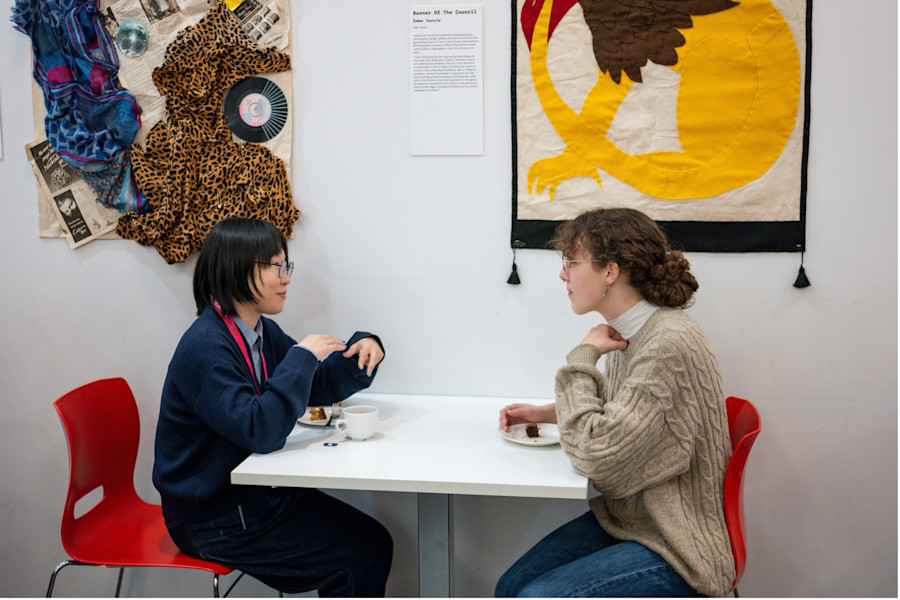
I also had the opportunity to network with fellow volunteers. I attended the preview of “Data-day Life,” an exhibition at the RAMM Café curated by members of the Youth Panel, a programme supporting young people aged 18-25 in developing museum skills and gaining practical experience in exhibition development. I listened to a talk and actively interacted with visitors, exchanging ideas and perspectives. I listened to a talk and actively interacted with visitors, exchanging ideas and perspectives.
A few days later, I joined the Youth Panel for a visit to the Ark, located outside Exeter’s city centre, where RAMM stores collections not currently on display. Guided by Archaeology and Antiquities Curator Thomas Cadbury and Natural Sciences Collections Officer Holly Morgenroth, we explored behind the scenes, including a large freezer for taxidermy, storage rooms for specimens, archaeological artefacts, oil paintings, and costumes. We also witnessed the creation of a digital database for collections and learned from a conservator how to assess the condition of an old sleigh soon to be featured in a transportation exhibition. Additionally, I gained insights into the processes of loans from other museums, object packing, and disposal due to redundancy or poor condition, as well as ongoing maintenance costs.
Reflecting on the Journey
Looking back, my internship at RAMM was filled with tasks that, although tiny, were mighty in their impact. Each responsibility I took on contributed to the museum’s broader mission of decolonisation and inclusivity. As an international student from China, this experience was particularly meaningful. It allowed me to bring my unique perspective to the museum, enriching its cultural fabric and ensuring it resonates with a global audience.
This internship has been an invaluable learning experience and a cornerstone of my MA in Curation journey, providing me with essential skills, experiences, and memories. I look forward to continuing my future career in the art world, armed with the knowledge and insights gained from my time at RAMM.
University of Exeter
Room 153, Queen's Building
The Queen's Drive
Exeter EX4 4QH